

Electronic vs Mechanical Anti-Sway: Retrofit Selection Guide
In modern industrial lifting operations, load sway significantly impacts both operational efficiency and safety. Consider a 15-ton Bridge Crane: when the Long Travel Speed reaches 30 m/min (98 ft/min), uncontrolled load swing can exceed 2 meters (6.6 ft), with positioning times often exceeding 0.5 seconds. This article analyzes the technical differences between electronic and mechanical anti-sway systems and provides a scientific selection guide for retrofit projects, leveraging AI algorithms to optimize performance.
The choice of an anti-sway system is critical not only for operator experience but also for production safety. According to the FEM 1.001 Crane Design Standard, the matching of crane metal structures and control systems must meet strict dynamic stability indicators. Furthermore, the TSG 51-2023 Crane Safety Technical Supervision Regulation explicitly states that special lifting equipment operating under frequent start-stop conditions must have effective load sway control measures to reduce collision risks and improve positioning accuracy.
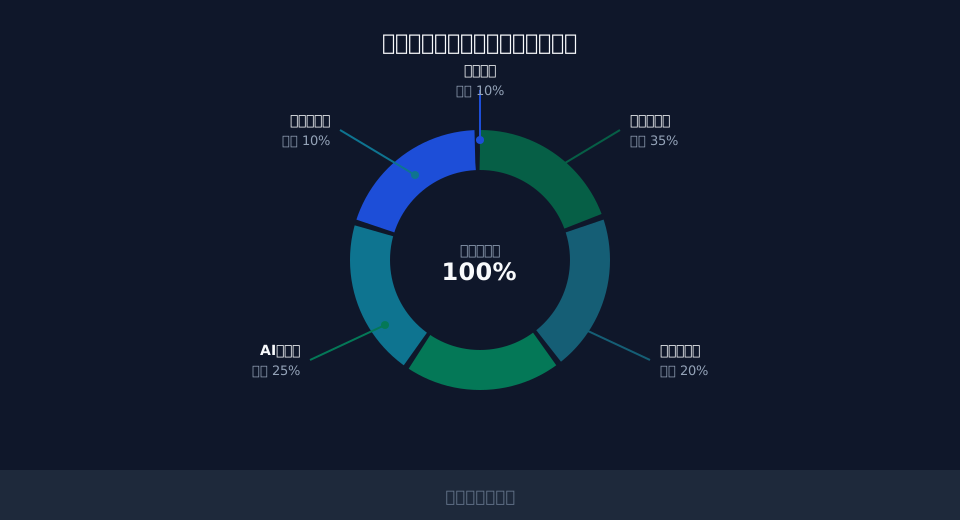
The following section explores the physical characteristics of mechanical anti-sway devices and the control logic of AI-based electronic systems. Combined with actual retrofit costs and selection strategies, we provide a comprehensive analysis of technical details and implementation solutions through engineering case studies.
Structural Principles and Physical Limitations of Mechanical Anti-Sway Devices
Mechanical anti-sway systems primarily rely on physical structures to absorb and limit the kinetic energy of the Lifting Spreader. Common devices include anti-sway beams, mechanical dampers, and wire rope guides. These systems consume sway kinetic energy by increasing structural stiffness or introducing friction damping. For example, installing a mechanical anti-sway beam on a heavy-load Double-Girder Bridge Crane with a Rated Lifting Capacity of 50 tons can effectively limit the initial sway angle to within 3 degrees.
"IndustryActual Measurement data shows that cranes using high-strength mechanical dampers can reduce the residual sway attenuation time to 4.5 seconds during full-load emergency stops, improving stability by approximately 30% compared to undamped structures."
The advantage of mechanical anti-sway systems lies in their straightforward structure, lack of complex electrical control requirements, and robustness in harsh environments (e.g., high temperature, high dust). However, their limitations are evident. Mechanical components are prone to fatigue wear under alternating loads. Take pins and spherical plain bearings as examples: their design service life typically ranges from 8,000 to 10,000 hours. Once wear exceeds standards, anti-sway effectiveness drops precipitously.
⚠️ Note
Routine maintenance of mechanical anti-sway devices is crucial. It is recommended to verify the torque of connection bolts every 5,000 operating hours or every six months and measure the thickness of damper friction linings. Replace immediately if wear exceeds 15% of the original thickness.
Control Logic and Response Mechanisms of AI-Based Electronic Anti-Sway Systems
Unlike the physical constraints of mechanical systems, electronic anti-sway systems ensure smooth operation through electrical control and software algorithms. Modern electronic anti-sway technology has entered the AI era, relying on high-precision sensors to real-time acquire the spreader's sway angle and speed. The AI anti-sway algorithm dynamically adjusts motor output torque to cancel out sway energy at the source.
The response speed of AI electronic anti-sway systems is extremely fast. The closed-loop control cycle, from sensor data acquisition to frequency inverter outputting control commands, is typically controlled within 0.2 seconds. In terms of positioning accuracy, advanced systems can keep the final stop deviation within ±5 mm. This non-contact control method eliminates mechanical wear and significantly enhances operational smoothness.
"According to the acceptance report of a large port lifting equipment upgrade project, introducing deep reinforcement learning-based AI anti-sway algorithms reduced residual sway at rated speed by 85%, decreasing the average single hoisting cycle time by 12 seconds."
💡 Tip
The precision of electronic anti-sway systems heavily depends on sensor accuracy. Perform zero calibration on absolute encoders and inclination sensors quarterly to ensure data acquisition deviation remains below 0.1%, maintaining optimal AI control efficacy.
Cost-Benefit Analysis of Retrofitting Anti-Sway Systems on Aging Cranes
For aging cranes already in operation, adding or upgrading anti-sway systems is a significant technical modification. Retrofit costs include hardware procurement, software licensing, on-site construction, and commissioning. For a double-girder bridge crane with a span of 22.5 meters (73.8 ft) and a rated capacity of 32 tons, upgrading from pure mechanical anti-sway to an AI electronic system costs approximately $17,964 (specific amounts are subject to the actual contract).
When evaluating benefits, consider efficiency improvements, energy savings, and reduced maintenance costs. By optimizing motor running curves, electronic anti-sway systems can reduce overall drive energy consumption by approximately 8%. Additionally, eliminating fragile mechanical damping parts saves approximately $2,245 annually in mechanical maintenance fees. Comprehensive calculations indicate that the return on investment for such projects is typically around 1.5 years.
"Statistics from Kelude Heavy Industry's Technical Service Center show that in over 120 completed anti-sway retrofit projects for aging cranes in the past three years, more than 90% of clients recovered total costs through efficiency gains and reduced failure rates within the first year post-retrofit."
Before retrofitting, a comprehensive assessment of the crane's main structure is mandatory. For equipment in service for over 10 years, conduct main beam weld crack detection in advance to ensure the metal structure can withstand dynamic load changes introduced by the electronic anti-sway system. Downtime during the retrofit must be strictly controlled, generally requiring core component replacement and system integration testing to be completed within 72 hours.
⚠️ Safety Advisory
During retrofit construction, strict adherence to Lockout/Tagout (LOTO) safety protocols is mandatory. When dismantling existing mechanical anti-sway devices, temporary support fixtures must be used to secure the lifting spreader, preventing structural instability and potential accidents. On-site safety supervision staffing ratios must not fall below 1:3.
Selection Strategies for Electronic vs. Mechanical Anti-Sway Systems by Operating Condition
Anti-sway system selection is not a one-size-fits-all solution; it requires matching the crane’s actual Work Duty Classification, operating environment, and hoisting process requirements. For cranes with a Work Duty Classification of A6 or above that require frequent Precise Positioning—such as those in paper mills or precision machining workshops—an AI electronic anti-sway system is the superior choice. Its non-contact control characteristics adapt well to high-frequency start-stop operating conditions.
Conversely, for applications with a Work Duty Classification below A4, lower travel speeds (e.g., long travel speed under 20 m/min), and harsh environments (e.g., strong magnetic fields or highly corrosive gases), mechanical anti-sway devices demonstrate higher reliability. Additionally, when planning workshop layouts, the intervention thresholds for the anti-sway system should be set in conjunction with anti-collision safety distance requirements to ensure adequate safety spacing during cross operation of multiple cranes.
"Selection guidelines indicate that when a crane's Rated Lifting Capacity exceeds 50 tons and its Span exceeds 28.5 meters, relying solely on mechanical anti-sway is insufficient to meet dynamic stability requirements. In such cases, an electronic or electromechanical hybrid anti-sway system must be introduced to ensure structural safety and operating accuracy."
💡 Pro Tip
Avoid over-specification during selection. For light-duty Duty Classifications and bulk material grabbing operations where positioning accuracy requirements are low, basic mechanical anti-sway or simple electrical limit switches are sufficient. Blindly adopting AI electronic anti-sway systems results in unnecessary investment waste.
Engineering Case Study: AI Anti-Sway Control Logic in Heavy Load Hoisting Projects
To intuitively understand the control logic of electronic anti-sway systems during braking, we analyze a specific engineering case study. Consider an Overhead Crane with a Rated Lifting Capacity of 75 tons, where the Crane Travel Mechanism utilizes Variable Frequency Speed Control and is equipped with an AI electronic anti-sway system. The rated operating speed of the long travel is known to be 60 m/min (1 m/s).
During the Precise Positioning phase, the system triggers deceleration braking. Assuming a long travel deceleration of 0.5 m/s², the braking distance $s$ is calculated using the classic kinematic formula: $s = v^2 / (2a)$. Substituting the values: $s = 1^2 / (2 \times 0.5) = 1$ meter. This means the bridge travels 1 meter from brake trigger to complete stop. During this stroke, the AI anti-sway system calculates the swinging phase of the Lifting spreader in real-time and fine-tunes the drive motor torque to ensure the swing velocity drops to zero at the moment of stopping.
"Engineering calculation standards show that under a deceleration setting of 0.5 m/s², the peak braking current of a 75 kW drive motor is limited to within 1.5 times the rated current. With a braking time of approximately 2 seconds, this provides ample computational and response windows for the AI algorithm."
⚠️ Critical Note
In practical parameter settings, a safety margin must be reserved for the theoretically calculated braking distance. It is recommended to set the actual control system's braking distance threshold to 1.2 times the theoretical value (i.e., 1.2 meters). This prevents extended braking distances caused by variations in the friction coefficient of the Crane Rail or eccentric load, thereby ensuring anti-collision safety.
To clearly compare the technical differences between the two anti-sway solutions, we have compiled the following core parameters comparison table for engineering reference.
📊 Core Parameter Comparison: Mechanical vs. AI Electronic Anti-Sway
| Comparison Parameter | MachineryAnti-Sway System | AIElectronicAnti-Sway System |
|---|---|---|
| control systemPrinciple | Physical Damping andstructurelimit switch | Sensorclosed loopandAIAlgorithmdynamic compensation |
| Response time | Passive Response,Without Active Intervention | Active Intervention,closed loopCycle / Period≤0.2Seconds (s) |
| Positioning Accuracy | ±20mm ~ ±50mm | ±2mm ~ ±5mm |
| maintenance cycle | Per5000Required per HourinspectionMachineryWear | Conducted Semi-AnnuallySensorZero Calibration |
| environmental adaptability | High Temperature Resistant、High Dust Environment,High Adaptability | RequiredIP54 Protectionor AboveElectrical Cabinet |
Once the technical differences are established, return on investment becomes the primary concern for management. The following table outlines the estimated costs and benefits of anti-sway retrofit projects across various capacities and operating conditions, based on industry averages.
📊 ROI Analysis for Anti-Sway Retrofits by Capacity and Operating Condition
| cranecapacity | retrofit solution | Estimatedcost(10,000 RMB) | Annual Savingscost(10,000 RMB) | payback period(Year(s)) |
|---|---|---|---|---|
| 10Ton(s) (t) - 20Ton(s) (t) | Foundation / Basicelectronic anti-swayUpgrade | 6.5 | 2.8 | 2.3 |
| 30Ton(s) (t) - 50Ton(s) (t) | AIelectronic anti-sway+MachineryDamping | 12.0 | 5.5 | 2.1 |
| 75Ton(s) (t) - 100Ton(s) (t) | Full SetAIAnti-sway+structureReinforced | 22.5 | 9.2 | 2.4 |
| 100Over Ton(s) | Customized Electro-Mechanical CompositeAnti-sway | 35.0Starting from | 14.5 | 2.4 |
FAQ
Q: Which components require priority attention during routine maintenance of a mechanical anti-sway device?
A: Routine maintenance should prioritize the connection pins, spherical plain bearings, and friction linings of the anti-sway beam. Regularly inspect the wear amount and lubrication status of the pins to ensure the friction lining thickness remains within the safe range. Verify the tightening torque of all connection bolts to prevent anti-sway failure caused by mechanical loosening.
Q: What is the typical control response latency for an AI electronic anti-sway system?
A: The closed-loop control response latency of modern AI electronic anti-sway systems is typically maintained at under 200 milliseconds. By efficiently coordinating data collection from sensors on the lifting spreader, algorithmic processing in the PLC, and torque adjustment commands output by the frequency inverter, the system ensures real-time cancellation of swing energy.
Q: What is the estimated budget for retrofitting an electronic anti-sway system onto a 50t double-girder bridge crane?
A: For a 50-ton double-girder bridge crane, a comprehensive retrofit solution combining AI electronic anti-sway with mechanical damping typically costs around $18,000 (specific amounts are subject to the actual contract). This estimate covers high-precision sensors, the AI control cabinet, frequency inverter upgrades, cabling accessories, and on-site installation & commissioning fees.
Q: Is non-destructive testing of the main girder required when retrofitting the anti-sway system?
A: Yes, it is highly recommended, especially for older cranes that have been in service for over 10 years or operate at higher work duties. Before installing an electronic anti-sway system, ultrasonic or magnetic particle non-destructive testing should be performed on the main girder weld seams and critical load-bearing nodes. This ensures the metal structure possesses sufficient stiffness and strength to withstand dynamic load variations introduced by the anti-sway system.
In summary, selecting and retrofitting a crane anti-sway system is a systematic engineering project that requires comprehensive consideration of operating condition requirements, technical characteristics, and return on investment. Whether relying on physical limit switches for mechanical anti-sway or utilizing AI algorithms for electronic anti-sway, the core objective is to guarantee lifting safety and enhance operational efficiency. Kelude Heavy Industry possesses extensive experience in heavy-load crane customization and technical retrofits, providing one-stop anti-sway system solutions ranging from conceptual design and equipment selection to on-site installation & commissioning, helping you achieve safer and more efficient production operations.
