

1-to-1 vs 1-to-2 Crane VFD: Key Differences
In crane automation retrofit projects, selecting the right variable frequency drive (VFD) system is critical for operational smoothness and energy efficiency. Consider a recent project at a major steel plant involving the upgrade of 12 overhead cranes with a 50-ton capacity. Implementing an optimized VFD solution reduced the retrofit duration by 30% and lowered overall energy consumption by 15%. Currently, two main configurations dominate the market: "one-to-one" (single VFD per motor) and "one-to-two" (single VFD driving two motors). These approaches differ significantly in control logic, hardware costs, and maintenance requirements. This article provides a technical analysis to help you make informed selection decisions.
In engineering design, compliance with safety standards is mandatory. Projects must adhere to the FEM 1.001 Crane Design Specification regarding electrical control system safety and comply with the TSG 51-2023 Safety Technical Supervision Regulation for special equipment retrofits to ensure legal and safe operations.
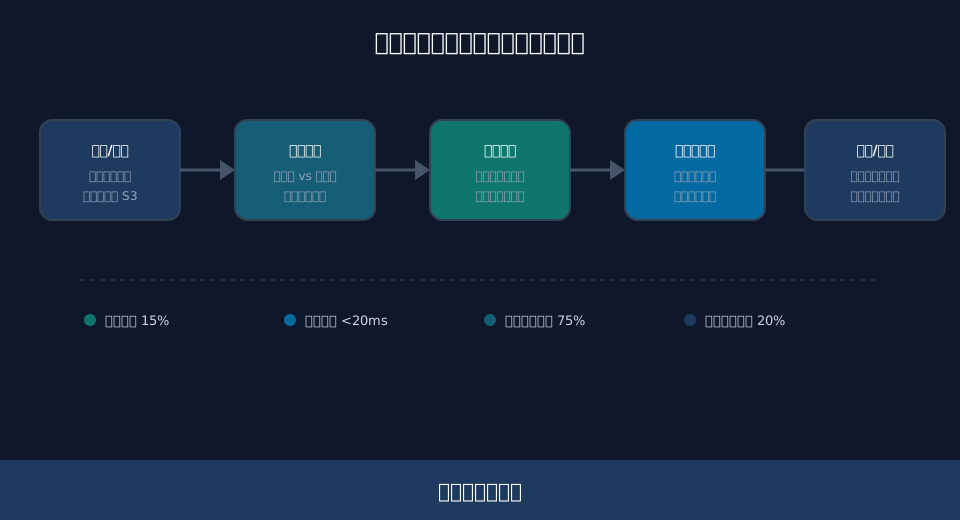
The following sections analyze the core differences between one-to-one and one-to-two VFD schemes across five dimensions: safety architecture, installation processes, total cost accounting, routine maintenance, and final selection criteria. This guide helps avoid common misconceptions during the retrofit process.
Safety Architecture Differences Between One-to-One and One-to-Two VFD Control Systems
Safety architecture is paramount in hoisting, trolley, and long travel mechanisms. The "one-to-one" configuration assigns one dedicated VFD to each electric motor, widely used in hoisting mechanisms. The "one-to-two" configuration uses a single VFD to drive two motors simultaneously, typically for symmetrical drives on both sides of the crane bridge or trolley. These architectures have essential differences in safety protection logic.
In a one-to-two setup, since two motors are connected in parallel to the same VFD output, the system cannot provide independent overload protection for each motor via internal electronic thermal relays. In practical engineering, for crane bridges with dual motors rated at 2×15kW, the system's current response time must be controlled within 20ms to ensure timely execution of braking commands.
"According to FEM 1.001 specifications, lifting appliances' electrical control systems must feature comprehensive overload, short-circuit, and undervoltage protection. For multi-motor drive systems, it is crucial to prevent total system loss of control during a single point of failure, and the action sequence of mechanical brakes must strictly match electrical braking."
To illustrate the safe braking process, consider this engineering case study. Assume a long travel speed of 60 m/min (1 m/s) with a deceleration rate of 0.5 m/s². Using the kinematic formula $s = v^2 / (2a)$, the braking distance is calculated as $s = 1^2 / (2 \times 0.5) = 1$ meter. This means the crane bridge will slide 1 meter after braking is triggered. If using a one-to-two scheme with mismatched motor parameters on both sides, uneven braking torque may occur, increasing the risk of rail gnawing or even derailment.
⚠️ Note
When adopting a one-to-two scheme, ensure that both electric motors have identical models, power ratings, and pole counts. Using motors from different batches or with slight parameter deviations can cause uneven force distribution, accelerating wear on mechanical transmission components over time.
Installation Process Comparison: One-to-One vs. One-to-Two VFD Schemes
The physical layout and installation process of the electrical cabinet directly impact construction quality and heat dissipation. A one-to-one scheme requires multiple independent VFDs, resulting in larger cabinet volume and higher wiring complexity compared to the one-to-two scheme. Efficiently planning cabinet dimensions is critical given the limited space in crane electrical rooms.
In terms of hardware size, a standard one-to-two VFD cabinet width is typically around 800mm. In contrast, a one-to-one scheme of equivalent power often requires a width of 1200mm to accommodate two separate rectifier and inverter units. Regarding cable selection, the one-to-two scheme requires a main incoming cable cross-section of 50mm². However, in the one-to-one scheme, current is distributed, allowing the use of 25mm² cables for individual VFD inputs, which simplifies cable laying.
"Industry installation data shows that for overhead crane retrofits of the same capacity, the one-to-two scheme takes approximately 32 hours for cabinet installation and wiring. The one-to-one scheme, with about 40% more terminal blocks, averages 45 hours, showing a significant difference in installation efficiency."
Additionally, cabinet layout must account for safety distances. For example, in workshops where multiple cranes run on shared rails, setting the anti-collision safety distance relies not only on mechanical buffers but also on precise deceleration signals from the electrical control system. This requires PLC modules in the VFD cabinet to have sufficient I/O points; the one-to-one scheme offers greater flexibility for point expansion.
💡 Tip
If the crane electrical room is small with poor ventilation, prioritize evaluating the one-to-two scheme to save installation space. If space is ample and high accuracy requirements exist for single-axis control, the one-to-one scheme is the more reliable choice.
Total Cost Accounting for Electrical System Upgrades: One-to-One vs. One-to-Two
Cost control is a core element in automation retrofit budgeting. Many users focus solely on the procurement cost of VFDs during initial selection, ignoring hidden costs such as cabling, spare parts inventory, and long-term maintenance. Calculating the life cycle cost is essential for scientific decision-making.
Take the retrofit of a double girder crane's long travel mechanism with a 50-ton capacity as an example. The initial procurement cost for a one-to-one scheme (using two independent VFDs) is approximately $2,250 higher than a one-to-two scheme (using one large-capacity VFD), subject to the actual contract. However, the one-to-one scheme performs better in energy consumption during operation and has stronger spare parts interchangeability. Comprehensive calculations show it can reduce spare parts inventory capital occupation by about 20%.
"Kelude Heavy Industry has validated life cycle cost models in multiple metallurgical projects: although the one-to-one scheme has higher initial installation costs, its independent control logic better matches advanced control algorithms. The long-term energy efficiency gains and reduced failure rates result in a superior total return on investment within three years compared to the one-to-two scheme."
Cost differences also lead to performance variations in advanced control strategies. For instance, when implementing an anti-sway algorithm, the one-to-one scheme provides independent closed-loop torque control for each motor, enabling more precise load sway suppression. The one-to-two scheme, sharing a DC bus and control circuit, faces limitations in algorithmic response accuracy.
⚠️ Note
Avoid the misconception of choosing based solely on low cost. While the one-to-two scheme has lower initial costs, if insufficient control accuracy damages mechanical structures, the resulting maintenance costs will far exceed the initial equipment savings.
The table below details the specific differences in hardware configuration and direct cost between the two options, serving as a reference for project budgeting.
📊 Initial Cost and Hardware Configuration Comparison: Single-to-One vs. Single-to-Two Solutions
| Comparison Parameter | 1-to-1 Drive Configuration(Independentdrive system) | 1-to-2 Drive Configuration(Paralleldrive system) |
|---|---|---|
| Frequency Inverter / VFDQuantity | 2Units(Single-Axis Independent) | 1Units(Dual-Axis Parallel) |
| Single UnitFrequency Inverter / VFDCapacity | 15kW | 30kW(Requires Upsizingsafety margin) |
| Line InputCable Cross-SectionProduct | 25mm² × 2Pieces | 50mm² × 1Pieces |
| Electrical CabinetwidthRequirement | Approx.1200mm | Approx.800mm |
| Initial Equipmentprocurement cost | Higher(Benchmark+30%) | Lower(Benchmark) |
Maintenance and Troubleshooting: Variable Frequency Drive System Strategies
The ease of routine maintenance and the efficiency of fault diagnosis directly determine production continuity in the workshop. The one-to-one and one-to-two variable frequency drive (VFD) schemes offer distinct advantages in maintenance logic; understanding these differences is key to developing a scientific maintenance plan.
In terms of fault isolation, the one-to-one scheme holds a significant advantage. If a Frequency Inverter or Motor fails, the other unit can maintain low-speed operation or hold braking status, reducing unplanned downtime from the traditional 4 hours to approximately 1 hour. Conversely, if the mainboard of the VFD in a one-to-two scheme fails, both motors lose power simultaneously, requiring spare parts replacement before resuming operations. Regarding parameter settings, the one-to-one scheme requires maintaining two independent sets of motor parameters and PID curves, whereas the one-to-two scheme only needs one set, simplifying commissioning work.
A field measurement case at a Port Terminal shows that after implementing a variable frequency drive retrofit with a one-to-one configuration, annual unplanned downtime due to electrical faults decreased by 65% thanks to single-axis fault isolation, while Overall Equipment Effectiveness (OEE) improved by 12 percentage points.
To clearly compare the maintenance indicators for both schemes in later stages, we have compiled the following data. These figures are based on feedback from hundreds of retrofit projects over the past three years, offering strong reference value.
The table below summarizes the core indicator differences between the two schemes regarding routine inspection, fault response, and spare parts management.
📊 Comparison of Maintenance Cycles and Fault Response Indicators: One-to-One vs. One-to-Two Schemes
| maintenanceIndicator | Performance of 1-to-1 Configuration | Performance of 1-to-2 Configuration |
|---|---|---|
| fault isolationCapability | Excellent(Single-axis failure does not affect the other axis) | Poor(Frequency Inverter / VFDFailure causes dual-axis shutdown) |
| ParameterNumber of Backup Groups | 2Group IndependentParameter | 1Group ComprehensiveParameter |
| spare parts inventoryType | Limited Types,High Versatility | Requires Stocking Large-Capacity Dedicated UnitsModule |
| mean time to repair (MTTR) | Approx.1.5Hours | Approx.3.5Hours |
| routine inspectionKey Focus | Two UnitsFrequency Inverter / VFDFans and Filters | Single UnitFrequency Inverter / VFDheat dissipationand Output Balance |
⚠️ Important Note
Regardless of the selected solution, cooling fans and dust-proof filters within the VFD cabinet must be cleaned or replaced every six months. In metallurgical workshops with high dust levels, poor heat dissipation is the primary cause of IGBT module failure in frequency inverters.
Selection Guide for One-to-One vs. One-to-Two VFD Solutions Under Heavy Load Conditions
In complex industrial environments, selecting the appropriate variable frequency drive (VFD) solution for specific heavy-load conditions is a core challenge for engineering technicians. Selection decisions should not only consider current equipment parameters but also anticipate future production needs and operating condition changes.
Regarding duty cycle, standard workshop cranes are typically designed for S3 40% classification, while metallurgical foundry cranes require S3 60% or higher to meet frequent heavy-load hoisting demands. In high-temperature environments (e.g., ambient temperature reaching 45°C), one-to-two solutions often require derating or mandatory air conditioning cooling due to concentrated heat generation from a single VFD. Conversely, one-to-one solutions offer better natural heat dissipation efficiency by dispersing heat, making them more suitable for harsh environments.
"Industry reports from the China Heavy Machinery Industry Association indicate that for heavy-load cranes with lifting capacities exceeding 100 tons or work duty classifications above A7, the adoption rate of independent one-to-one drive solutions has exceeded 85%. Their high reliability and control accuracy have been widely validated."
In practical engineering, Kelude's technical team typically advises clients to make decisions based on the core application of the equipment. For cranes requiring high-precision positioning, anti-sway control, or integration with automated storage & retrieval systems (AS/RS), a one-to-one solution is essential. However, for standard crane bridge mechanisms used primarily for bulk material handling, where synchronization requirements are low and budgets are constrained, a one-to-two solution offers superior cost-effectiveness.
💡 Tip
When selecting solutions for heavy-load conditions, ensure at least a 15% current safety margin is reserved for the VFD. When providing heavy-load customization services, Kelude performs thermal simulation calculations for specific operating conditions to ensure stable operation of the electrical system even under extreme loads.
FAQ
Q: Do the parameters of the two motors need to be strictly identical in a one-to-two solution?
A: Yes. A one-to-two solution requires strict consistency in motor model, power, number of poles, and even rotor resistance between the two units. Parameter deviations can lead to uneven torque distribution, potentially causing rail gnawing (wheel flange rubbing) or triggering overcurrent faults in the VFD.
Q: How does the system protect against overload if one motor fails in a one-to-two VFD setup?
A: Since one-to-two configurations share a single VFD, internal electronic thermal relays cannot provide individual protection for each motor. Independent thermal overload relays must be installed in the stator circuit of each motor. If a single motor overloads, the normally closed contact of the thermal relay cuts off the VFD control circuit, ensuring safe shutdown.
Q: How much more expensive is a one-to-one solution compared to one-to-two, and what is the payback period?
Taking the crane travel mechanism of a 50-ton double-girder crane as an example, the initial installation cost for two independent VFDs is approximately $2,250 higher than that of a single large-capacity VFD (subject to the actual contract). However, due to lower energy consumption and stronger spare parts compatibility, the one-to-one solution typically achieves a return on investment within 1.5 to 2 years.
Q: Can existing brakes on old cranes be directly compatible with new VFD solutions during automation retrofit?
Usually, direct compatibility is not possible. Older cranes often use AC contactors for brake control, whereas VFD retrofits require synchronization between the brake and the inverter. It is recommended to upgrade the original brake control to a dedicated VFD brake control module. This ensures precise timing coordination between brake release and frequency output, mitigating the risk of load slipping.
In summary, both one-to-one and one-to-two VFD solutions for cranes have their advantages and disadvantages. Selection should comprehensively consider safety redundancy, installation space, life cycle cost, and maintenance convenience. With deep technical accumulation, Kelude provides one-stop automation retrofit services for heavy-lifting equipment, ranging from solution assessment and custom design to installation & commissioning. We ensure that every piece of lifting equipment operates safely and efficiently under complex working conditions.
