

Overhead Crane Unm Retrofit Challenges
In the steel and heavy manufacturing sectors, unmanned overhead cranes are rapidly transitioning from theoretical concepts to large-scale industrial implementation. Industry research indicates that deploying fully automated crane systems can boost workshop logistics efficiency by approximately 35% while significantly reducing safety hazards associated with manual operations. However, enabling multi-ton equipment to operate autonomously within complex factory environments at millimeter-level precision presents a formidable technical barrier. This article provides an in-depth analysis of five core technological challenges in AI-enabled unmanned overhead cranes, exploring the real-world engineering hurdles involved in achieving precise positioning and intelligent obstacle avoidance.
The design and implementation of unmanned overhead cranes must strictly adhere to relevant national standards. For instance, FEM 1.001 (Crane Design Specification) sets explicit requirements for structural fatigue strength and stiffness, while TSG 51-2023 Crane Safety Technical Supervision Regulation imposes strict regulations on the safety interlock logic of automated controls. These standards form the foundation for ensuring safety compliance during unmanned retrofitting projects.
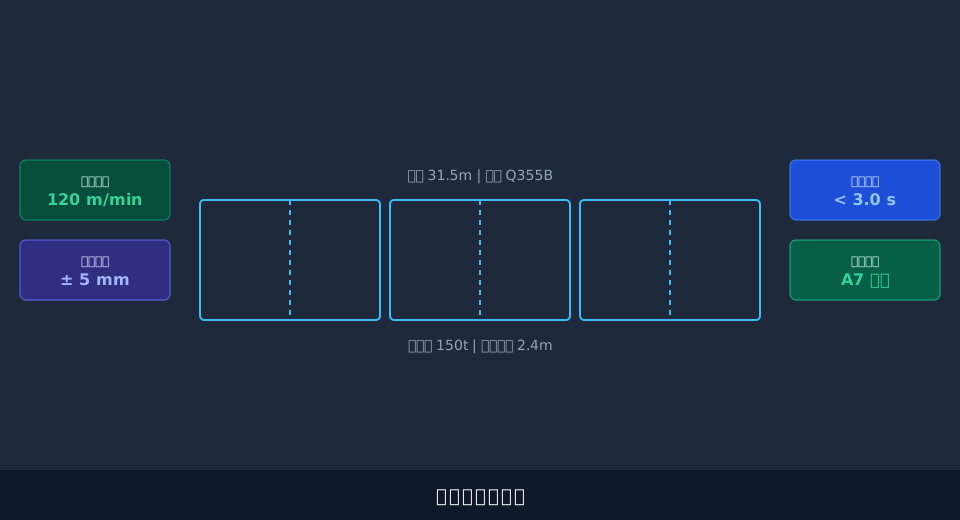
The intelligence of unmanned overhead cranes is not merely a simple accumulation of devices but involves deep integration across multiple dimensions, including perception, decision-making, and execution. The following sections break down the application difficulties and solutions of AI technology in practical engineering through five key dimensions: positioning accuracy, anti-sway control, dynamic obstacle avoidance, path planning, and system coordination.
To achieve fully automatic pickup and placing, the primary prerequisite for unmanned overhead cranes is solving the "where am I" problem. Traditional open-loop control, which relies on cumulative encoder calculations, suffers from significant accumulated errors over long-term operation. Wheel slippage or rail wear leads to positional drift, making it impossible to meet the high accuracy requirements of modern workshops.
High-Precision 3D Positioning via Multi-Sensor Fusion
The current mainstream solution employs fusion positioning combining absolute encoders with laser distance measurement and visual markers. In the Long Travel direction, Laser Distance Sensors are typically used, achieving a precision of ±2mm. In the Trolley direction, calibration is performed using barcode tapes or reflector plates installed alongside the rails. With Long Travel Speeds often set at 120m/min, maintaining positioning stability at high speeds poses a significant challenge.
Calculating braking distance is critical during engineering implementation. Taking a Long Travel speed of 60m/min (1m/s) and a deceleration of 0.5m/s² as an example, the braking distance s = v²/(2a) = 1²/(2×0.5) = 1m. To ensure parking accuracy remains within ±5mm, the system must issue deceleration commands 1m in advance.
First, laser distance measurement is used for absolute position measurement of the bridge travel stroke.
Second, visual recognition of ground QR codes enables precise positioning of the trolley.
"Measured data shows that in a workshop with a span of 31.5m, multi-sensor fusion positioning reduces combined error from ±50mm (traditional encoders) to within ±5mm."
⚠️ Note
Installation angle deviation of Laser Distance Sensors directly causes ranging errors. On-site commissioning requires total station calibration to ensure the beam parallelism error relative to the rail is less than 0.5°.
Once position perception is resolved, controlling the swinging of the lifting spreader becomes the second major challenge. Multi-ton steel coils or steel plates exhibit pendulum effects during acceleration and braking, affecting positioning accuracy and threatening the safety of equipment below. Kelude Heavy Industry's technical team found that traditional mechanical anti-sway methods are limited when facing variable loads, necessitating the introduction of intelligent algorithms.
Dynamic Anti-Sway Control for Heavy Loads Using AI Algorithms
By integrating AI anti-sway algorithms, the system uses deep learning models to predict the swing cycle of the lifting spreader in real-time and dynamically adjusts the output frequency of the VFD. For heavy-load cranes exceeding 50t, the no-load swing cycle is typically around 4.5s; the algorithm must complete phase compensation within this time window. For a detailed explanation of AI anti-sway principles, refer to our deep dive into AI Anti-Sway Algorithms.
First, a dynamic model of the lifting spreader's swing is established to obtain natural frequency parameters.
Second, neural networks are utilized for online identification of real-time load spectra.
"According to lifting appliance inspection procedures, for cranes with a Rated Lifting Capacity above 50t, no-load anti-sway time should be controlled within three swing cycles."
💡 Tip
When the lifting spreader load changes suddenly (e.g., grabbing irregular steel coils), the AI model requires approximately 1.5 seconds to re-converge. During this period, Long Travel acceleration should be limited to no more than 0.2m/s².
Workshop environments are not static. Temporarily stacked materials, inspection personnel, and cross-running equipment require the unmanned overhead crane to possess keen perception capabilities. Setting the anti-collision safety distance is core to the Obstacle Avoidance System, directly impacting the safety of both personnel and equipment.
LiDAR and Vision Fusion Obstacle Avoidance for Complex Environments
Modern unmanned overhead cranes are typically equipped with 3D LiDAR and HD cameras. LiDAR constructs point cloud maps of the surrounding environment to identify obstacle profiles, while the vision system classifies obstacle types to determine if emergency braking is required. Specific safety distance settings can be referenced in related standards such as Crane Anti-Collision Safety Distances, where dynamic safety distances are typically set at 3m.
On one hand, LiDAR scans the fan-shaped area ahead of the Long Travel at a frequency of 20Hz in real-time.
On the other hand, vision algorithms filter point cloud data to eliminate noise caused by dust and steam.
In a specialty steel workshop retrofit project, integrating an Obstacle Avoidance System successfully reduced the false alarm rate from 15% (single vision solution) to under 2%, effectively ensuring Continuous operation efficiency.
⚠️ Note
In ladle lifting areas with high temperatures, thermal radiation causes LiDAR Ranging drift. A water-cooled Protective Cover must be retrofitted, and metal dust on the lens surface must be cleaned regularly.
Once perception and control issues for a single overhead crane are resolved, determining how it navigates efficiently within a large factory building directly impacts overall logistics efficiency and energy consumption. Path Planning is not merely a geometric problem but a multi-objective optimization challenge.
Global 3D Path Planning Optimization Model Balancing Energy Consumption and Efficiency
Global Path Planning requires comprehensive consideration of the overhead crane’s 3D coordinates, current Load, target position, and fixed obstacles within the Factory building. Algorithms typically employ improved versions of A* or RRT to find trajectories that optimize time or energy indicators while satisfying kinematic constraints. In a specialty steel project delivered by Kelude Heavy Industry, the environment—a span of 28.5m and Lifting Height of 18m—posed extremely high demands on Path Planning.
The first step is constructing a 3D grid map containing all fixed equipment and dynamic obstacles.
The second step is calculating multiple candidate paths based on the current overhead crane status and evaluating their total cost.
An engineering case study indicates that in a facility with a 28.5m span and 18m Lifting Height, optimized Path Planning can reduce no-load stroke by approximately 12% per lift, saving nearly 40,000 kWh of electricity annually.
💡 Tip
When conducting structural fatigue assessment on the Main Girder, frequent sharp turns in the path exacerbate stress concentration at weld seams. It is recommended to incorporate data from weld crack detection into the planning algorithm, adding penalty weights for main girder deflection.
In large heavy-industry workshops, multiple overhead cranes often operate on the same or intersecting Crane Rails. Preventing interference and achieving efficient task allocation is the final hurdle for the maturation of unmanned overhead crane systems and a key test of system architecture design capabilities.
Digital Twin and Intelligent Scheduling Control Architecture for Multi-Crane Coordinated Operation
Digital Twin technology plays a critical role here. By mapping the real-time status of the physical workshop in a virtual space, the dispatching system can pre-simulate the trajectories of multiple overhead cranes, identify potential collision points, and dynamically adjust time windows. The system requires that when coordinating four overhead cranes, the scheduling response delay must be less than 50ms.
First, construct a high-precision digital twin model at the workshop level to update equipment pose in real-time.
Second, adopt a distributed scheduling algorithm to assign independent and conflict-free task queues to each overhead crane.
In a shipyard block workshop project undertaken by Kelude Heavy Industry, collaborative scheduling of four 150t overhead cranes shortened the overall turnover cycle for block flipping and hoisting by 22%.
⚠️ Note
Multi-crane coordination systems are highly sensitive to network latency. When the scheduling response delay exceeds 50ms, anti-collision logic may lag. Industrial-grade 5G or wired Ethernet must be used to ensure communication Stability.
To intuitively demonstrate the performance leap brought by AI technology, we conducted a detailed comparison of key control indicators between traditional Semi-automatic overhead cranes and fully AI-driven unmanned overhead cranes.
📊 Comparison of Core Technical Indicators: Traditional vs. AI Unmanned Overhead Cranes
| Comparison Parameter | TraditionalSemi-automaticoverhead crane | AIFullunmanned overhead crane |
|---|---|---|
| Positioning Accuracy | ±30mm ~ ±50mm | ±2mm ~ ±5mm |
| anti-sway control | MachineryAnti-sway,Relies on manual experience | AIDynamic anti-sway,Automatic compensation |
| obstacle avoidanceMethod | Limit switch,Passive trigger | 3Dpoint cloud+vision,Proactive prediction |
| scheduling logic | Standalone operation,Prone to interference | Digital TwinGlobalcollaborative scheduling |
With the overall technical indicators clarified, we now focus on Positioning—a core challenge—comparing the performance of three mainstream solutions in real-world Workshop environments.
📊 Performance Comparison of Mainstream Positioning Solutions Under Complex Operating Conditions
| PositioningSolution | Dust resistance | Cumulative error | maintenance cost |
|---|---|---|---|
| PureEncoderLength measurement | Strong | High(Requires frequentCalibration) | Low |
| Laser Distance Measurement+Barcode | Medium | Minimal(Absolute position) | Medium |
| visionQR codeIdentification | Weak(Light-dependent/Affected by dust) | None | High(Requires lens cleaning) |
FAQ
Q: Can the AI vision system of an unmanned overhead crane operate normally in a workshop with heavy dust?
A: In heavily dusty environments, relying solely on visual solutions often leads to failure. Therefore, engineering practice typically employs a fusion solution combining LiDAR and vision systems. Since LiDAR is unaffected by dust, the vision system serves only as an auxiliary classifier for categorization. Additionally, cameras are equipped with positive-pressure purging devices to ensure lens cleanliness.
Q: What are the specific requirements for the frequency inverter of the hoisting mechanism when using an AI anti-sway algorithm?
A: The AI algorithm requires real-time adjustment of the motor's output frequency, necessitating that the VFD possesses extremely high response speed and communication bandwidth. Typically, the VFD must support industrial real-time Ethernet protocols such as Profinet or EtherCAT, with a control cycle of less than 4ms to ensure precise execution of anti-sway commands.
Q: What is the estimated renovation budget for upgrading a traditional overhead crane to an AI-powered unmanned overhead crane?
A: The renovation cost is significantly influenced by the condition of the original equipment, the desired level of intelligence, and sensor configuration. Basic automation retrofit costs are lower, while the investment for a full suite of AI vision and digital twin systems is higher. Specific amounts are subject to the actual contract. We recommend having professional manufacturers conduct a site survey to provide a detailed quotation.
Q: How should network interruptions be handled during coordinated operation of multiple unmanned overhead cranes?
A: The system features a robust network interruption protection mechanism. Upon detecting a communication break, the overhead crane immediately triggers safe braking and halts current actions. Once communication is restored, the dispatching system re-verifies the position of each crane, performs a global state reset, and automatically resumes operation only after confirming there is no collision risk.
Upgrading to intelligent unmanned overhead cranes is a systematic engineering project. From underlying high-precision positioning to top-level multi-crane coordination, every link demands profound technical accumulation and rigorous engineering practice. With extensive experience in heavy-load lifting equipment, Kelude Heavy Industry provides full-lifecycle customization services—from conceptual design and manufacturing to intelligent control system integration—helping heavy industry enterprises achieve true smart manufacturing.
