

Bridge Crane: Variable Frequency vs. Two-Speed Control
In industrial material handling, the operational smoothness of an overhead crane is critical for both production efficiency and safety. Over the past 15 years, the surge in demand for automation retrofits has placed traditional two-speed hoisting motors and variable frequency speed control (VFD) systems at the center of technical discussions. Data indicates that workshops adopting VFD retrofits have seen equipment fault shutdown rates drop by approximately 30%, while initial investment costs increased by nearly $66,600 (approx. 450,000 CNY) for a typical 50-ton class crane procurement budget. This article provides an in-depth analysis of the working principles and application scenarios for both speed control methods to help enterprises make informed decisions during their automation upgrades.
When selecting equipment and designing retrofits, it is mandatory to strictly adhere to the regulations regarding mechanism classification groups and motor thermal verification outlined in FEM 1.001 Crane Design Standard. Furthermore, the electrical safety design of the automated control system must meet the mandatory requirements for protective devices and interlock controls specified in TSG 51-2023 Crane Safety Technical Supervision Regulation.
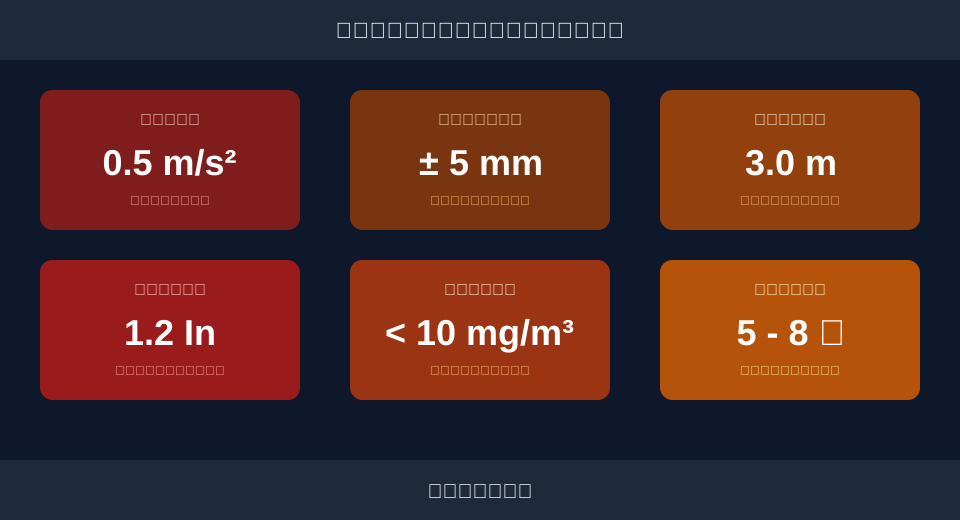
The following section comprehensively analyzes the technical details and selection strategies for two-speed versus variable frequency drive solutions in bridge cranes, examining five key dimensions: differences in working principles, improvements in long travel operational smoothness, life cycle cost comparisons, electrical fault management, and comprehensive automation upgrade assessments.
Working Principle Differences Between Two-Speed Motors and Variable Frequency Control in Hoisting Mechanisms
The hoisting mechanism is the core component of a bridge crane, with its speed control performance directly determining load positioning precision and operational safety. Traditional two-speed motors and modern variable frequency speed control systems differ fundamentally in their underlying physical principles and control logic.
Two-speed motors primarily achieve speed switching by altering the number of pole pairs in the stator winding. Common hoisting two-speed motors utilize 4/12-pole or 4/16-pole designs, maintaining a fixed high-to-low speed ratio of approximately 1:3 or 1:4. For instance, a hoisting motor with a rated high speed of 10 m/min will have a low-speed setting of roughly 2.5 m/min. While this stepped speed regulation offers a simple structure and lower cost, the abrupt change in rotational speed during switching generates significant mechanical shock.
In contrast, a variable frequency speed control system uses a frequency inverter to convert standard frequency power into an AC power source with adjustable frequency and voltage, driving a standard squirrel-cage asynchronous motor for stepless speed regulation from 0 to 50 Hz. Operators can precisely set lifting speeds via the control console, enabling smooth acceleration and deceleration profiles.
We can compare the braking and positioning effects using a specific engineering case study. Assume the hoisting mechanism operates at 10 m/min (0.167 m/s). If using a two-speed motor, switching to a stop state without a smooth deceleration process causes the brake to engage abruptly, resulting in substantial impact. With variable frequency control, the system can be programmed with a deceleration rate of 0.2 m/s² for smooth slowing down. According to kinematic formulas, the time required to decelerate from 0.167 m/s to zero is t = v/a = 0.167/0.2 = 0.835 s, and the braking distance is s = v²/(2a) = 0.167²/(2 × 0.2) ≈ 0.07 m. This smooth deceleration significantly reduces suspended load sway.
"According to measured data from relevant mechanical design manuals, hoisting mechanisms using variable frequency stepless speed control reduce average suspended load sway upon positioning by approximately 65% compared to two-speed motors, while shortening micro-motion positioning time by 40%, significantly enhancing operational efficiency in precision assembly workshops."
⚠️ Note
When using two-speed motors, it is essential to ensure sufficient electrical and mechanical interlock delay (typically not less than 0.2 seconds) between the low-speed and high-speed contactors. This prevents power supply short circuits or excessive dynamic torque impacts during pole switching, thereby protecting the reducer gears from damage.
Enhancing Long Travel Operational Smoothness via Variable Frequency Systems in Automation Retrofits
The crane travel mechanism supports the weight of the entire bridge girder and hoisting trolley. Its operational quality affects the structural stress on the factory building and directly impacts the wear life of the crane rails and wheels. In automation retrofits, the improvement in long travel operational smoothness provided by variable frequency speed control is particularly significant.
Traditional long travel drives often rely on wound-rotor motors with series resistance speed control or two-speed motors, which cause large current surges during start-up and braking, leading to longitudinal body sway. With the introduction of variable frequency control, long travel speeds typically range between 40 m/min and 60 m/min. The frequency inverter allows precise setting of acceleration/deceleration parameters within a reasonable interval of 2 to 5 seconds, achieving soft start and soft stop capabilities.
Taking a long travel speed of 60 m/min (1 m/s) as an example, if the deceleration is set to 0.5 m/s², the braking distance is calculated as s = v²/(2a) = 1²/(2 × 0.5) = 1 m. This controllable braking distance ensures parking accuracy while avoiding severe load sway caused by emergency braking. Combined with AI anti-sway algorithms, the system can fine-tune the long travel speed in real-time based on the sway angle to actively eliminate oscillation.
Additionally, variable frequency drives effectively reduce peak current during long travel start-up. Measured data shows that after adopting variable frequency soft start, the starting current of the bridge drive motor can be controlled within 1.2 times the rated current. Compared to direct-on-line starting or series resistance starting, the peak current drops by approximately 60%, substantially reducing the impact on the workshop power grid.
"After retrofitting the long travel mechanisms of three 50-ton bridge cranes in a heavy machinery manufacturing workshop to variable frequency drives, the abnormal wear rate of crane wheels decreased by 45%. The longitudinal sway amplitude during long travel was reduced from ±150 mm before the retrofit to within ±30 mm."
💡 Tip
When setting acceleration/deceleration parameters for the long travel frequency inverter, the natural frequency of the bridge girder must be fully considered. If the acceleration/deceleration time is too short, it may excite lateral or longitudinal resonance in the bridge. It is recommended to use frequency domain analysis testing to set the acceleration/deceleration time in a range that avoids the bridge's self-vibration frequency; typically, 3 to 4 seconds is the suitable range.
Life Cycle Cost Analysis and Selection Strategies for Two-Speed vs. Variable Frequency Bridge Cranes
Cost control is one of the core elements in decision-making for lifting equipment procurement or automation retrofits. The two-speed and variable frequency schemes present distinct distribution characteristics regarding initial investment versus ongoing maintenance costs, requiring enterprises to conduct a comprehensive life cycle assessment.
From an initial hardware procurement cost perspective, the variable frequency drive (VFD) solution is significantly more expensive than the two-speed alternative. A VFD control cabinet equipped with a frequency inverter, braking unit, and filtering reactor typically costs approximately 40% more than a comparable two-speed control cabinet of the same power rating. However, the advantages of the VFD solution become evident during the maintenance phase. By enabling true soft start and stepless speed regulation, the system eliminates arc erosion caused by frequent contactor switching. Consequently, the replacement frequency of contactors within the electrical control circuit is reduced by approximately 80%.
When developing solutions for clients, the Kelude Heavy Industry technical team typically employs a life cycle cost (LCC) model for calculation. For heavy load operating conditions with high Work Duty classifications (such as A6 and Above), where equipment operates for more than eight hours daily, the maintenance savings and reduced downtime costs associated with the VFD solution usually offset the additional initial investment within three to five years.
The following table provides a detailed comparison of the differences in initial investment and hardware configuration between the two schemes.
📊 Comparison of Initial Investment and Hardware Configuration: Two-Speed vs. Variable Frequency
| Comparison Parameter | two-speed motorcontrol systemSolution | Variable Frequency Speed Controlcontrol systemSolution |
|---|---|---|
| Coredrive systemComponent | Two-SpeedAsynchronousElectric Motor | StandardSquirrel CageMotor + Frequency Inverter / VFD |
| Control CabinetInitial Installationcost | Baselinecost(100%) | Approx. Baseline140% |
| main circuitContactorQuantity | High(With SwitchingContactor) | Low(For Use OnlyPower SupplyIsolation) |
| Braking Resistorconfiguration | Not Required | Requiredconfigurationbraking unitAndResistance |
The following table presents a comparative analysis of the lifecycle maintenance cost and failure rate for both solutions after five years of operation, providing key data to support long-term selection.
📊 Lifecycle Maintenance Cost and Failure Rate Comparison
| AssessmentIndicator | two-speed motorcontrol systemSolution | Variable Frequency Speed Controlcontrol systemSolution |
|---|---|---|
| 5Annual ElectricalmaintenanceTotalcost | Higher(Contactor/RelayreplacementFrequent) | Lower(Reduce by Approx.65%) |
| MachineryComponentWearRate | Higher(Gear/CouplingHigh Impact) | Lower(Soft StartExtendservice life) |
| Annual Averagefault shutdownTime | Approx.45Hours/Years | Approx.15Hours/Years |
| Comprehensivepayback period | N/A(Initial Installationlow cost) | Approx.3To5Years(heavy load condition) |
Industry data indicates that in continuous-operation workshops with a Work Duty of A7, the total cost of ownership for Variable Frequency Speed Control is approximately 18% lower than that of Two-Speed solutions over the full lifecycle. The economic benefits typically begin to yield positive returns starting from the fourth year of operation.
⚠️ Note
Do not focus solely on the initial purchase price during selection. For Warehouse cranes operating less than two hours per day under light-duty classifications (e.g., A1–A3), Two-Speed solutions still offer a cost advantage. However, for heavy-load continuous applications such as Steel Mills or paper manufacturing, downtime costs must be factored into cost accounting; in these cases, opting for VFD control is essential.
Common Electrical Faults and Maintenance Essentials for VFD Systems in Complex Conditions
Despite their advantages, Variable Frequency Speed Control systems contain numerous precision power electronics components and require strict environmental conditions. In complex working environments characterized by high temperatures, heavy dust, or strong vibration, improper maintenance can easily lead to electrical faults.
Ambient temperature is a key factor affecting the service life of frequency inverters. The standard Operating ambient temperature for VFDs is typically -10°C to 40°C. When the ambient temperature exceeds 40°C, derating is mandatory; generally, the rated output current must be reduced by approximately 2% to 3% for every 1°C increase. Additionally, dust concentration in the workshop should be kept below 10mg/m³, as excessive conductive dust can cause short circuits on internal control boards.
The smooth start-stop characteristics provided by variable frequency drive technology not only protect the electrical system but also significantly reduce dynamic stress on mechanical structures. This reduction in mechanical shock indirectly lowers the frequency and risk of weld crack detection for the Main Girder, thereby extending the service life of the metal structure.
In routine maintenance, cleaning the cooling air ducts of the VFD is paramount. If cooling fans are blocked by dust, it can cause the IGBT module to overheat, triggering Thermal protection or leading to component failure. Furthermore, DC filter capacitors inside the VFD are Wear Parts; their electrolyte gradually dries up over time. With a normal service life of approximately 5 to 8 years, their capacitance attenuation should be regularly measured using a capacitance meter.
Statistical analysis of VFD crane failures in a steel mill rolling workshop revealed that overheating shutdowns due to poor heat dissipation accounted for 42% of total VFD failures, while control board short circuits caused by dust accounted for 28%. After strengthening environmental control and implementing regular cleaning, the overall failure rate decreased by 75%.
💡 Tip
For casting or cement workshops with significant dust, it is recommended to install a positive-pressure ventilation system for the electrical control cabinet or use an independent electrical room with a Protection Rating (IP) of IP54 or higher. This isolates dust and corrosive gases at the source, ensuring long-term stable operation of the VFD system.
Comprehensive Assessment of Crane Automation Upgrades Integrating Anti-Sway and Anti-Collision Technologies
Modern automation retrofitting of Bridge Cranes has evolved beyond simple motor speed control toward intelligent, unmanned operation. Deep integration of variable frequency speed control with advanced technologies such as anti-sway and anti-collision is the inevitable trend for enhancing overall equipment effectiveness.
Anti-sway technology relies on high-precision encoder feedback and complex kinematic models. By making fine adjustments to the Trolley and bridge drive motors via the VFD, the system can limit the swing amplitude of the load to within ±5mm, achieving true "stop-and-stabilize" performance. This not only improves handling efficiency but also lays the foundation for subsequent automated grasping and placement.
In workshops requiring multi-crane collaborative operation, safety redundancy design in the Anti-Collision System is critical. Using LiDAR or Ultrasonic Sensors, the system monitors the distance between adjacent cranes in real-time. According to specifications for anti-collision safety distance, the first-level deceleration warning distance is typically set at 5m, and the second-level emergency braking distance at 3m, ensuring no physical interference occurs under any working condition.
Leveraging Kelude Heavy Industry's extensive experience in heavy-load customization, enterprises undertaking such comprehensive upgrades should prioritize VFD systems with open communication interfaces (such as PROFINET or EtherCAT). This enables seamless integration with upper-level MES systems for real-time acquisition of production data and process optimization.
According to an intelligent development report released by the China Lifting Appliances Association, automated Bridge Cranes integrating anti-sway and anti-collision functions improve comprehensive logistics turnover efficiency by 35% compared to traditional models, while reducing operator accident rates by over 90%.
⚠️ Note
Anti-collision sensors are prone to zero drift or lens contamination after long-term operation. They must be included in the monthly routine inspection plan. Regularly calibrate the sensor's ranging accuracy using standard targets to ensure the reliability of emergency braking logic. Do not let safety measures become ineffective.
FAQ
Q: What core components need to be replaced when retrofitting a two-speed motor to variable frequency speed control?
A: Core modifications include dismantling the original two-speed motor and switching contactors, replacing them with standard asynchronous electric motors. The electrical control cabinet requires the addition of a frequency inverter, braking unit, Braking Resistor, and Input / Output Line Reactor. Additionally, new Power Cable and encoder feedback lines must be laid, and the PLC Control program must be upgraded to adapt to VFD communication protocols.
Q: How much energy can a Variable Frequency Drive (VFD) crane save compared to a two-speed system?
A: VFD technology significantly improves energy efficiency by eliminating heat losses from rotor resistance and reducing voltage during light loads. Measured data shows that for applications with frequent starts and stops, VFD solutions reduce power consumption by approximately 15% to 25% compared to traditional two-speed or wound-rotor systems. The exact savings depend on the crane’s duty cycle and operating frequency.
Q: For heavy-duty cranes over 50 tons, which speed control solution offers a shorter payback period?
A: For heavy-duty Bridge Cranes exceeding 50 tons with a Work Duty of A6 or higher, we strongly recommend the Variable Frequency Speed Control solution. Although the initial investment is higher, the significant reduction in mechanical shock and electrical component wear leads to substantial savings in maintenance costs and downtime. These savings typically offset the price difference within 3 to 4 years, resulting in a shorter overall payback period and higher long-term benefits.
Q: Do VFD cranes risk motor overheating during long-term low-frequency operation?
A: Standard variable frequency motors may indeed face overheating risks at low frequencies (e.g., below 10 Hz), as their self-cooling fans slow down, reducing heat dissipation capacity. To mitigate this, use variable frequency motors equipped with independent forced cooling fans. Alternatively, configure the Frequency Inverter with low-frequency torque boost and thermal protection parameters to ensure the temperature rise remains within the safe range during low-speed, high-torque operations.
In summary, both two-speed and Variable Frequency Drive solutions for overhead type cranes have distinct operational boundaries. Two-speed systems remain a cost-effective and reliable choice for light-load, low-frequency scenarios. Conversely, VFD technology, with its superior stability, energy-saving effect, and intelligent expansion capabilities, is the essential choice for heavy-load, high-frequency, and automation retrofit applications. When making decisions, enterprises should move beyond simple price comparisons and adopt a life cycle cost model for scientific evaluation. Kelude Heavy Industry is dedicated to providing customized heavy-lifting solutions, leveraging rigorous engineering calculation and robust manufacturing process to help every client achieve efficient and safe upgrades in Material Handling.
