

Multi-Crane Dispatching System
In modern large-scale manufacturing facilities, multi-crane cooperative operation is the standard. However, mutual waiting and path conflicts between overhead cranes often lead to significant drops in production efficiency. By implementing an intelligent dispatching system with global path planning and real-time anti-collision algorithms, workshops can improve overall logistics efficiency by approximately 30%, reduce equipment collision rates to below 0.1%, and keep the dispatching system’s command response time under 0.5 seconds. This article provides an in-depth analysis of how intelligent scheduling systems scientifically orchestrate multiple overhead cranes to eliminate idle time, ensuring smooth and safe production workflows.
When designing and deploying such multi-crane coordination systems, strict adherence to national standards is mandatory. For instance, electrical control and structural safety must comply with the requirements outlined in FEM 1.001 Crane Design Standard (formerly FEM 1.001) to ensure mechanical stability under complex operating conditions. Simultaneously, anti-collision and safeguarding logic must meet the mandatory provisions of the TSG 51-2023 Crane Safety Technical Supervision Regulation, establishing a robust underlying logic to protect personnel and equipment during multi-crane operations.
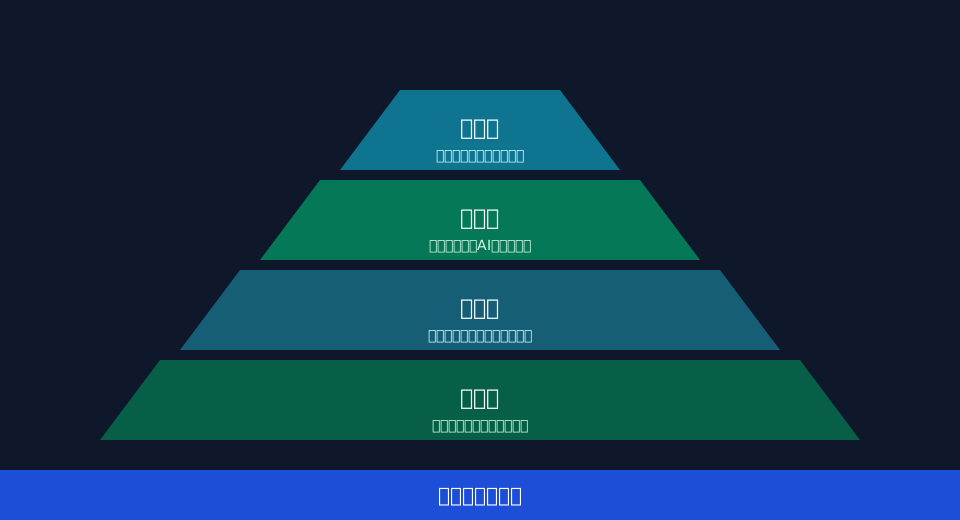
The following sections analyze the technical details and engineering practices of intelligent crane dispatching systems across five dimensions: core algorithm principles, anti-collision safety distance settings, hardware selection and cost accounting, electrical fault diagnosis, and field measurement cases, providing a comprehensive overview of multi-crane coordinated operations.
Core Algorithm Principles for Multi-Crane Path Planning in Intelligent Dispatching Systems
The core of an intelligent dispatching system lies in its advanced path planning algorithms. In scenarios where multiple overhead cranes share the same crane rail, the system converts the workshop’s physical space into a digital model. Typically, the dispatching system divides the floor and aerial workspace into 3D grids with side lengths of 0.5 meters, assigning weight values to each grid—for example, infinite weight for obstacle zones and a weight of 1 for free zones. Through this high-precision spatial discretization, the system maintains real-time awareness of each overhead crane’s precise location and operating status.
For path searching, the system generally employs an improved A* algorithm combined with a time window mechanism. While traditional A* algorithms consider only spatial distance, the integration of time windows allows the algorithm to predict grid occupancy over the next few seconds. When multiple overhead cranes initiate lifting tasks simultaneously, the dispatch center completes path calculations for all tasks within 50 milliseconds and assigns non-conflicting time windows to each crane. This spatiotemporal joint planning effectively eliminates queueing delays at intersections.
"Industry field measurement cases indicate that after adopting spatiotemporal joint path planning algorithms, the average waiting time for four cooperating overhead cranes dropped significantly from 45 seconds to under 8 seconds, while path conflict occurrences decreased by 92%, substantially boosting the workshop’s overall throughput."
In practical engineering applications, algorithm optimization must align with specific process characteristics. Depending on the workshop layout, the dispatching system performs fine-tuning of parameters:
First, for long, narrow workshops, the system prioritizes Long Travel continuity to minimize time losses caused by frequent trolley lateral movements.
Second, for complex workshops with multiple connected bays, the system introduces buffering logic in cross-operation transfer zones to ensure smooth transitions when cranes cross track transfer points.
💡 Tip
When deploying scheduling algorithms, it is recommended to reserve at least 20% computing power redundancy. This prepares the system for future production capacity expansions or additional crane installations, preventing command latency caused by full-load system operations.
Anti-Collision Safety Distance Settings and Dynamic Obstacle Avoidance for Multiple Cranes
In multi-crane coordinated operations, anti-collision is the primary task for maintaining the safety baseline. The intelligent dispatching system relies not only on software-based path planning but also requires hardware-level dynamic obstacle avoidance as dual protection. Currently, mainstream solutions utilize data fusion between LiDAR and Encoders. LiDAR units are installed at both ends of the crane bridge in the direction of travel, scanning at a frequency of 40Hz to detect obstacle distances on the tracks ahead in real time.
Safety distance settings are not static; they are dynamically calculated based on the overhead crane’s travel speed and braking performance. Consider the following engineering case study for a typical workshop: Assume the rated operating speed of the crane bridge is 60 m/min (1 m/s), and the Variable Frequency Drive (VFD) braking deceleration is set to 0.5 m/s². According to kinematic formulas, the braking distance $s = v^2 / (2a) = 1^2 / (2 \times 0.5) = 1$ meter. Accounting for system response delay and mechanical brake slack time, an additional safety buffer of 0.5 meters is typically added. Therefore, the dynamic anti-collision safety distance for this operating condition should be set to 1.5 meters. For more detailed specifications on distance settings, refer to the technical analysis of crane anti-collision safety distances.
"In a field measurement case at a heavy machinery plant, the introduction of 40Hz high-frequency LiDAR and a 1.5m dynamic safety distance setting maintained a minimum actual spacing of approximately 1.8 meters between two adjacent cranes during cross operations, completely eliminating rear-end collision risks caused by braking skids."
Dynamic obstacle avoidance technology also includes adaptive speed regulation. When the LiDAR detects that the distance to the leading crane enters the early warning zone (e.g., 3 meters), the system automatically triggers a deceleration command, reducing the travel speed to 30% of the rated speed. If the distance enters the danger zone (1.5 meters), the system directly cuts the travel circuit and applies mechanical braking.
⚠️ Note
LiDAR detection lenses require regular cleaning. Dust or moisture in the workshop can adhere to the lens surface, shortening detection range or causing false alarms. It is recommended to clean optical lenses and calibrate the light path once a month.
The table below provides a detailed comparison of the three most common anti-collision sensor solutions used in industrial sites, helping engineers make appropriate selections based on workshop environments.
📊 Technical Solution Comparison for Common Anti-Collision Sensors
| SensorType | DetectionAccuracy | anti-interference capability | Applicableenvironment |
|---|---|---|---|
| 2DLiDAR | ±10mm | Strong(Unaffected by lighting conditions) | High dust、Low lightWorkshop |
| Ultrasonic Sensor | ±30mm | Medium(Affected bytemperature/Airflow) | Standard indoor、No strong airflowenvironment |
| Infrared beam detector | Fixed point onlyDetection | Weak(Affected by strong light/Dust interference) | environmentcleanliness、Requires onlylimit switchProtection |
Once hardware selection is finalized, it is essential to evaluate the cost-effectiveness and performance of different dispatching schemes at the system architecture level. The following table provides a comprehensive comparison of three mainstream architectures.
📊 Comprehensive Evaluation of Intelligent Dispatching System Architecture Costs and Performance
| system architecture | Single unitretrofit costEstimated | dispatchingresponse delay | Scalability |
|---|---|---|---|
| CentralizedPLC Control | Approx.8-1010k RMB | 50-100ms | Limited byPLCPoints,Moderate scalability |
| DistributedEdge Computing | Approx.12-1510k RMB | 10-20ms | nodeIndependent,High scalability |
| Cloud-basedcollaborative scheduling | Approx.15-2010k RMB | 20-50ms(Network-dependent) | Supports cross-Workshop/Large-scale across multiple plantsdispatching |
Hardware Selection and Cost Analysis for Smart Crane Dispatching Systems
Upgrading traditional overhead cranes to an intelligent dispatching system requires careful hardware selection, which is critical for ensuring system stability. The core control unit typically utilizes a mid-range PLC equipped with high-speed communication interfaces, featuring a control cycle of 2ms to guarantee synchronization accuracy during multi-axis linkage. On the drive side, frequency inverters (VFDs) supporting PROFINET or EtherCAT buses are mandatory to enable stepless speed regulation and precise positioning for both the crane bridge and trolley.
Beyond basic drives, smart cranes must integrate advanced auxiliary control modules. For instance, to minimize load sway during rapid movement, the system incorporates an AI anti-sway algorithm. This adjusts motor output torque in real-time via the VFD to counteract the pendulum effect of the suspended load. With this feature, swing amplitude during positioning can be controlled within ±15mm, significantly reducing the time required for manual alignment.
"Based on Kelude Heavy Industry's retrofit experience across multiple heavy industry workshops, the intelligent upgrading of a single 50-ton double-girder overhead crane—including PLC upgrades, VFD replacement, LiDAR installation, and encoder setup—incurs hardware and construction costs of approximately $18,000. Specific amounts are subject to the actual contract."
When conducting cost accounting, it is essential to account for implicit downtime costs alongside explicit hardware procurement expenses. A well-planned retrofit schedule aligns electrical cabinet wiring and commissioning with workshop maintenance windows. Typically, the on-site retrofit duration for a single overhead crane ranges from 5 to 7 days.
⚠️ Note
When selecting frequency inverters, ensure their overload capacity meets the S3 duty classification requirements of the hoisting mechanism. Standard VFDs designed for fans and water pumps cannot withstand the current surges caused by frequent start-stop cycles of hoisting mechanisms; forced use may lead to module overheating and failure.
Electrical Fault Diagnosis and Preventive Maintenance Strategies in Multi-Crane Coordination
While intelligent dispatching systems enhance efficiency, they also impose higher demands on the electrical health of equipment. The built-in fault diagnosis module performs real-time monitoring of motor winding temperatures, DC bus voltage in VFDs, and communication link stability. When motor winding temperature reaches an alarm threshold of 120°C, the dispatching system automatically reduces the crane’s travel speed and prioritizes task allocation to other healthy units, preventing insulation aging due to overheating.
Communication delay is a hidden threat in multi-crane coordination. The system mandates that data interaction latency between cranes and the central server remain below 10ms. If packet loss or excessive latency occurs, the system immediately triggers a degraded operation mode, switching from automatic scheduling to manual operation for individual cranes to ensure uninterrupted production. Additionally, regarding mechanical structural risks, the system leverages vibration sensor data to provide early warnings for main beam weld crack detection.
"Drawing on years of field service experience, Kelude Heavy Industry finds that establishing a robust preventive maintenance strategy can reduce electrical failure rates by 60%. It is recommended to measure carbon brush wear amount on conductor rails every six months; brushes must be replaced when wear reaches one-third of their original length."
Routine maintenance strategies should adhere to data-driven principles. The dispatching system automatically generates operational health reports for each crane, including cumulative operating hours, start-stop counts, and fault code statistics. Maintenance personnel can use this data to precisely identify weak points, shifting from reactive "repair-after-breakdown" to proactive condition-based maintenance.
💡 Tip
When cleaning the interior of electrical cabinets, never use high-pressure air guns directly on VFD and PLC circuit boards. High-pressure airflow can easily blow conductive dust into component pins, causing short circuits. Instead, use dry soft-bristle brushes combined with industrial vacuum cleaners for cleaning.
Field Measurement Case: How Intelligent Crane Dispatching Enhances Workshop Logistics Efficiency
The value of theoretical technology is ultimately verified through practical engineering. In a large automotive parts manufacturing workshop, four 50/10-ton double-girder overhead cranes were originally configured. Due to the lack of unified dispatching, cranes spent over 35% of total working hours waiting for each other or running no-load. After introducing the intelligent crane dispatching system, the workshop’s logistics efficiency saw significant improvement.
Post-retrofit, the system tracked production data for three months. Results showed that the average lifting cycle per trip decreased from 45 seconds to 32 seconds, while overall equipment utilization jumped from 65% to 88%. More importantly, by optimizing empty return paths, the no-load travel distance was reduced by 22%, leading to an approximate 15% decrease in total energy consumption. This Turnkey Project, provided by Kelude Heavy Industry—from site survey and conceptual design to construction and commissioning—was completed in just 45 days.
"Field measurements confirm that the intelligent dispatching system not only resolves inter-crane waiting issues but also reduces ineffective work through global optimization. With unchanged production capacity, the workshop saves approximately $60,000 annually in electricity and labor waiting costs, keeping the return on investment period under 2.5 years."
This case fully demonstrates that intelligent upgrading is not merely stacking equipment but unlocking existing potential through the deep integration of algorithms and hardware. For manufacturing enterprises facing capacity bottlenecks, this represents a highly cost-effective path to expansion.
⚠️ Note
During the initial launch phase, it is advisable to retain a 1-to-2-week observation period for manual intervention. Operators need time to adapt to the new scheduling logic. If any process routes appear unreasonable during this period, communicate promptly with system engineers to fine-tune and optimize dispatching rules.
FAQ
Q: What are the specific network bandwidth requirements for the intelligent dispatching system?
A: The system primarily transmits control commands and status data, resulting in a relatively low data volume. It typically utilizes an industrial-grade Gigabit ring network architecture, where each overhead crane consumes no more than 5Mbps of real-time bandwidth. To ensure low latency and high reliability, we recommend physically isolating the workshop network from the office network and equipping it with redundant links.
Q: When multiple overhead cranes operate simultaneously, what is the PLC Control cycle time?
A: In a distributed Edge Computing architecture, the Underlying Logic control cycle for the local PLC on a single overhead crane is typically 2ms. Meanwhile, the central dispatch server manages global Path Planning and task distribution for all cranes within a cycle of under 50ms, fully meeting the real-time performance requirements for multi-crane coordination.
Q: What is the estimated budget for retrofitting an existing workshop with intelligent anti-collision and dispatching systems?
The budget depends on the number of overhead cranes, the depth of the Retrofit, and hardware selection. Taking a single 50-ton Double Girder overhead crane as an example, including PLC, Variable Frequency Drive (VFD), Sensors, and commissioning, the retrofit cost per unit is approximately $18,000. The overall project budget requires a detailed assessment based on actual operating conditions, with specific amounts subject to the actual contract.
Q: How does the dispatching system integrate data with the existing MES system in the workshop?
The dispatching system typically provides standard OPC UA or RESTful API interfaces. The MES system can send production work orders and material priority through these interfaces, while the dispatching system provides real-time feedback on crane location, task progress, and equipment status. This achieves a seamless closed loop between production planning and logistics execution.
In summary, the intelligent overhead crane dispatching system breaks through the efficiency bottleneck of coordinated operation among multiple cranes through advanced algorithmic planning, robust intelligent anti-collision mechanisms, and reliable hardware support. With deep expertise in Heavy load customization, Kelude Heavy Industry provides lifecycle service—from Site Survey and conceptual design to system integration—helping manufacturing enterprises achieve Digitalization and intelligent transformation of their workshop logistics.
