

Crane Positioning Accuracy in Narrow Spaces
In modern factory buildings and dense warehousing environments, the intelligent positioning accuracy of cranes operating in narrow spaces directly determines production efficiency and safety levels. Traditional positioning systems typically exhibit a combined error exceeding 50 mm, making them unsuitable for precision assembly requirements. By introducing AI compensation algorithms, however, the system can stabilize dynamic positioning errors within 15 mm. This article provides an in-depth analysis of precision bottlenecks in narrow-space operations and details the compensation mechanisms and engineering applications of AI algorithms.
When designing and selecting intelligent positioning systems, it is essential to strictly adhere to relevant national standards. For instance, the FEM 1.001 Crane Design Specification sets clear requirements for structural stiffness and operational smoothness, providing the foundational basis for sensor installation and data sampling frequencies in positioning systems. Additionally, provisions regarding safety protection devices and control system reliability in the TSG 51-2023 Crane Safety Technical Supervision Regulation serve as critical benchmarks for evaluating the safety redundancy of AI positioning systems.
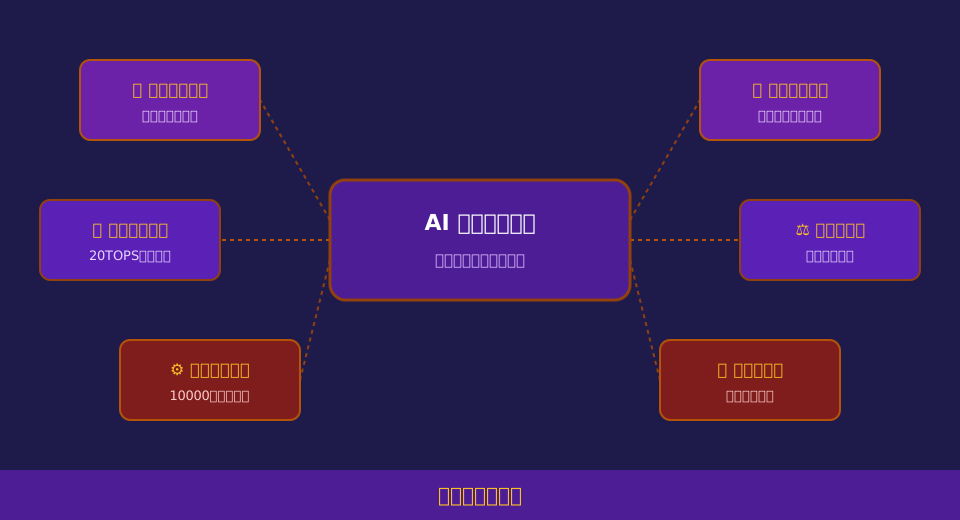
The following sections comprehensively analyze the technical details and engineering practices of crane intelligent positioning systems across five dimensions: multi-dimensional error sources in narrow spaces, AI spatial perception compensation algorithms, core hardware selection and cost accounting, anti-sway joint commissioning strategies, and routine maintenance troubleshooting.
Multi-Dimensional Error Sources in Narrow-Space Crane Positioning Systems
Challenges facing intelligent crane positioning systems in narrow-space scenarios are far more complex than in open areas. Constrained space causes sensor signals to be easily interfered with by metal reflections and multipath effects, leading to positioning drift. Addressing this issue requires first identifying the specific sources and distribution patterns of these errors.
Based on on-site measurements, positioning errors in narrow spaces primarily consist of three components. Errors caused by transmission backlash account for approximately 30% of the total error, while electrical control latency contributes about 25%. Environmental interference resulting in sensor noise accounts for a significant 45%. Particularly in aisles flanked by dense racks, LiDAR point cloud data often contains numerous false echoes.
Mechanical transmission backlash mainly includes clearance between crane wheels and crane rails, as well as gearbox gear backlash. Consider, for example, an Overhead Crane with a span of 22.5 m and a Lifting Capacity of 50 t, where the Long Travel Speed is set to 60 m/min (equivalent to 1 m/s). During braking, if the deceleration is set to 0.5 m/s², the theoretical braking distance is calculated as follows: s=v²/(2a)=1²/(2×0.5)=1 m. However, in actual narrow spaces, due to variations in lateral constraint forces on the rails, the actual braking distance may fluctuate between 0.85 m and 1.15 m. This 15% deviation directly impacts final positioning accuracy.
"Industry measured data shows that in traditional systems without compensation algorithms, repeat positioning accuracy in narrow spaces (aisle width less than 1.2 times the crane span) is only ±45 mm, whereas accuracy in open areas reaches ±20 mm. Environmental interference is the core factor causing this decline in precision."
⚠️ Note
When deploying LiDAR in narrow spaces, ensure that no metal pipes with a diameter smaller than 50 mm exist within the sensor's field of view. Otherwise, multipath reflections will cause severe noise in the point cloud data. It is recommended to install physical filtering grilles in front of the radar.
AI Spatial Perception Compensation Algorithm Based on Machine Vision and LiDAR Fusion
To address the susceptibility of single sensors to interference in narrow spaces, introducing multi-sensor fusion technology is an effective way to enhance positioning accuracy. When developing its next-generation Smart Crane, Kelude Heavy Industry adopted an AI spatial perception architecture featuring the deep integration of machine vision and LiDAR, eliminating environmental interference through algorithmic compensation.
The core of this algorithm lies in combining Kalman filters with deep neural networks. The system collects LiDAR point cloud data at a frequency of 50 Hz and acquires visual images at a rate of 30 fps. The AI model extracts edge features from images and geometric features from point clouds to perform spatiotemporal alignment and data fusion. When LiDAR generates false obstacles due to metal reflections, the vision system identifies them as background noise based on texture features and removes them.
Regarding dynamic compensation, the system introduces an anti-sway control model based on reinforcement learning. As the lifting spreader swings in narrow spaces, the vision system tracks its three-dimensional coordinates in real time. Based on the swing period (typically between 3 and 5 seconds) and amplitude, the algorithm calculates reverse speed commands. For instance, when the system detects a rightward swing amplitude of 120 mm, it controls the Trolley to fine-tune toward the right with an acceleration of 0.15 m/s², suppressing the swing amplitude to within 20 mm within 2.5 seconds. For detailed principles of the AI anti-sway algorithm, refer to the specialized technical analysis of AI Anti-Sway Control.
"In a retrofit project for narrow aisles at an automotive parts manufacturing plant, applying multi-sensor fusion AI compensation algorithms reduced the crane's dynamic positioning error from 38 mm to 12 mm, shortening the hoisting cycle time by 15%."
💡 Tip
Vision cameras are prone to interference from flickering lights in narrow spaces. It is recommended to use industrial cameras supporting global shutters with a frame rate of no less than 60 fps, and install polarizing filters in front of the lenses to eliminate specular reflections from metal surfaces.
Core Hardware Selection and Cost Accounting for Intelligent Positioning Systems in Narrow Spaces
Hardware selection for intelligent positioning systems not only affects positioning accuracy but also directly influences the overall return on investment. In narrow-space operations, hardware equipment must feature higher Protection Ratings (IP) and smaller physical dimensions to adapt to compact installation environments. Rational selection and accurate cost accounting are key to project success.
Core hardware primarily includes high-precision LiDAR, industrial vision cameras, edge computing gateways, and high-resolution encoders. The LiDAR must have a measuring range of at least 200 m and an angular resolution of 0.1 degrees to capture minute features in narrow spaces. The computing power of the edge computing gateway must exceed 20 TOPS to meet real-time performance requirements for multi-sensor data fusion and AI model inference. Furthermore, encoder resolution must reach 10,000 lines to ensure precise feedback on the positions of both Long Travel and Cross Travel movements.
When it comes to cost accounting, adapting for narrow spaces introduces certain hidden costs. Due to spatial constraints, sensor brackets require Custom Design, adding approximately 8% to the total hardware cost for machining. Additionally, to ensure Stability in a harsh environment, all outdoor or semi-outdoor sensors must be Upgrade to an IP67 Protection Rating (IP), which increases Sensor procurement cost by about 12%. Overall, the hardware investment for a complete positioning system typically ranges from $22,500 to $37,500, subject to the actual contract.
| HardwareModule | Criticalparameter indicators | Narrow Space Adaptationrequirements |
|---|---|---|
| 2D/3DLiDAR | Measuring Range≥200m,AngleResolution≤0.1° | Supports Multi-Echo Technology,Anti-Metal Reflection Interference |
| Industrialvision camera | Resolution≥500Megapixel (MP),frame rate≥60fps | global shutter,Supports Polarized Filtering,Compact Size |
| edge computing gateway | computing power≥20 TOPS,memory≥16GB | Fanlessheat dissipation design,Wide Operating Temperature Range |
The table above details the key parameter indicators for the three core hardware components of a positioning system, along with their specific adaptation requirements in narrow-space environments, providing an intuitive reference for equipment selection.
Cost Structure and Proportion Analysis of Hardware for Narrow-Space Positioning Systems
| costProject | Estimatedcost range(10,000 RMB) | Accounting for % of TotalcostProportion | Remarks |
|---|---|---|---|
| Sensorand Data Acquisition Equipment | 6.0 - 9.0 | 40% - 45% | Includingradar、camera、Encoderetc. |
| Edge ComputingandControl Cabinet | 4.5 - 6.5 | 25% - 30% | Includinggateway、PLC、Frequency Inverter / VFDetc. |
| Custom Bracket andcable | 2.0 - 3.5 | 12% - 15% | Specialized for Narrow Spacesmounting bracketandcable drag chain |
| Software License andCommissioning | 2.5 - 4.0 | 15% - 20% | AIAlgorithm License and On-siteCalibration |
According to Kelude Heavy Industry’s project data, the payback period for narrow-space intelligent positioning systems typically ranges from 18 to 24 months. This is primarily driven by efficiency gains and reduced cargo loss resulting from decreased manual intervention.
⚠️ Note
When calculating costs, do not overlook on-site network cabling expenses. If wireless transmission is used in narrow spaces, additional investment in industrial-grade APs and signal amplifiers is required. We recommend prioritizing shielded twisted pair cable for wired connections to ensure data stability.
Joint Commissioning of Anti-Sway Control and Dynamic Positioning Accuracy
After hardware installation and software deployment, joint commissioning is the core step to ensure positioning accuracy meets requirements. In narrow spaces, a crane’s anti-sway control and dynamic positioning accuracy are coupled; any imbalance in one area degrades overall performance. Therefore, a scientific joint commissioning strategy is essential.
Joint commissioning consists of two phases: static calibration and dynamic testing. Static calibration is performed under no-load conditions to calibrate sensor zero points and coordinate mapping. Technicians must use a total station to establish at least five known-coordinate control points within the narrow space. By comparing sensor measurements with true values, a spatial transformation matrix is calculated. Calibration error must be controlled within 2mm before proceeding to dynamic testing.
Dynamic testing simulates actual operating conditions, focusing on validating the AI compensation algorithm during motion. The crane operates at rated speed (e.g., Crane Bridge 80m/min, Trolley 40m/min) with frequent starts and stops at varying accelerations (0.3m/s², 0.5m/s²). The system records the lifting spreader’s 3D coordinates and swing angle in real-time. If the swing attenuation time exceeds 8 seconds after stopping, adjust the S-curve parameters in the Frequency Inverter / VFD or optimize the damping coefficient of the AI anti-sway model. For setting the anti-collision safety distance, refer to the technical specifications for anti-collision safety distance.
During commissioning at a steel mill’s cold-rolling workshop, optimizing the VFD S-curve and AI damping coefficients reduced the lifting spreader’s swing attenuation time from 12 seconds to 4.5 seconds at rated speed, improving dynamic positioning accuracy by 40%.
💡 Tip
During dynamic debugging, verify the algorithm logic at low speed (30% of rated speed) first. Gradually increase to full speed only after confirming no anomalies. During full-speed testing, ensure no personnel remain in the narrow-space access system and set up physical safetyWarning / Alert lines.
Routine Maintenance and Common Fault Troubleshooting Guide
After long-term operation in narrow spaces, intelligent positioning systems may experience accuracy drift or intermittent faults due to environmental dust, vibration, and temperature changes. Establishing a standardized routine maintenance system and an efficient fault diagnosis procedure is fundamental to ensuring long-term stable operation.
Routine maintenance covers three main areas: sensor cleaning, mechanical tightening, and data backup. LiDAR and vision camera lenses should be cleaned weekly using anhydrous ethanol and dust-free cloths to ensure light transmittance remains above 95%. For mechanical components, monthly inspection of sensor bracket tightening bolts is required, with torque reaching specified values (e.g., M8 bolts require 25N·m). Additionally, complete backups of system configuration parameters and AI model weight files should be conducted regularly every month to prevent data loss.
Fault troubleshooting follows the principle of “software before hardware, external before internal.” When the system reports excessive positioning deviation, check for drastic changes in ambient lighting or oil stains on the Crane Rail surface causing Crane wheel slippage. If external factors are ruled out, check system logs for packet loss in the sensor data stream. For critical structural components like the Main Girder, Non-destructive testing should be conducted regularly, such as using main beam weld crack detection technology, to prevent sensor mountingReference Plane shifts caused by structural deformation.
Maintenance statistics show that 80% of positioning faults in narrow spaces stem from contaminated sensor lenses or loose brackets. Strictly implementing weekly cleaning and monthly tightening protocols can increase the system’s trouble-free operation time (MTBF) by at least 30%.
⚠️ Note
When cleaning sensor lenses, strictly avoid using corrosive solvents or rough materials to prevent damage to optical coatings. Furthermore, when maintenance personnel perform work at height, they must wear a Safety Belt and secure tools within a safety lanyard loop.
FAQ
Q: What is the service life of sensors in a narrow-space intelligent positioning system?
A: Under standardized maintenance, the design service life for industrial-grade LiDAR and vision cameras is typically 5 to 8 years. The edge computing gateway has a lifespan of approximately 5 years. Actual life is influenced by environmental dust, temperature, and vibration; we recommend conducting a core sensor performance assessment every 3 years.
Q: How much does introducing AI compensation algorithms increase the retrofit cost?
A: Compared to traditional positioning systems, adding AI algorithms and multi-sensor fusion hardware increases initial investment by approximately $10,000 to $15,000 (roughly 20%–30%). However, through reduced manual intervention and cargo loss, the additional cost is typically recovered within 18 to 24 months. Specific amounts are subject to the actual contract.
Q: Can the system operate normally in narrow spaces with high temperatures or heavy dust?
A: Yes. The sensors selected for the system feature an IP67 Protection Rating, and the edge computing gateway supports wide-temperature operation from -4°F to 140°F (-20°C to 60°C). To address dusty environment service conditions, a positive pressure dust cover can be retrofitted along with an automatic purging device. This ensures optical lenses remain uncontaminated, guaranteeing data acquisition accuracy.
Q: What are Kelude Heavy Industry’s advantages in customizing cranes for narrow spaces?
A: Kelude Heavy Industry possesses extensive experience in heavy load customization, enabling us to provide crane body designs that feature a compact structure and high stiffness even in extremely confined spaces. Combined with our proprietary AI-based intelligent positioning system, we achieve full-link optimization from mechanical structure to control algorithm, ensuring high precision and safe operation under complex operating conditions.
In summary, improving the accuracy of crane intelligent positioning systems in narrow-space operations relies on precise multi-dimensional error analysis, deep application of multi-sensor fusion AI algorithms, rational hardware selection and cost accounting, scientific joint commissioning strategies, and rigorous routine maintenance. Leveraging rich experience in heavy-load customization, Kelude Heavy Industry is committed to providing clients with holistic solutions ranging from equipment bodies to intelligent control systems, helping enterprises achieve efficient and safe material handling under complex conditions.
